Kazino yeni mərc təcrübəsini artırmaq üçün bir sıra müsbət aspektlər təqdim edir. Ad günündən əlavə bonuslar, əgər üstünlüklərə sadiq qalmaq istəyirsinizsə, sistem sizin üçün bir şey təqdim edir. Oyunların böyük bir dəstəsi heç-heçədir. Hər həftəlik reklamlar əyləncənizi davam etdirir.
İnsanlar daşına bilən yığım üçün əksər sorğu üsullarını seçə və pul çıxarmağa başlaya bilərlər. (more…)
İnternet kazino təhlükəsizliyi, internet problemlərindəki ifrat rəqəmsal maneənin xüsusiyyətləri və maliyyə ifadələrinin başlanğıcı ilə başlayır. Bunlar təhlükəsizlik, firewall və çatlaqları saxlamaq üçün etibarsız işə xüsusi ümid verən başlanğıc mənbələridir.
Rifahı artırmaq üçün qumar evləri tənzimləyici standartlara aydın şəkildə uyğunluq nümayiş etdirirlər. (more…)
Благодаря многоуровневому рабочему процессу эффективная система обеспечения безопасности игроков выявляет аномалии вдобавок идентифицирует приоритетность самый что ни на есть нешуточных помех. Она также слится из приборами KYC и AML в видах эскалации а также ручной проверки.
Для функциям отвечающей забавы относятся проверки реальности, напоминающие геймерам про то, вяча медли они обдурили в игре, вдобавок приборы самоисключения, позволяющие геймерам проверять свою лучшую забаву. (more…)
Discover how healthy meals can transform your life. Learn the basics of eating well with a step-by-step recipe for a delicious Quinoa Vegetable Bowl. Perfect for busy days and balanced nutrition.
Eat Well, Live Well: A Simple Guide to Healthy Meals
In today’s fast-paced world, eating healthy often feels like a challenge. With so many processed and fast food options around us, it’s easy to fall into poor habits. But the truth is: healthy eating doesn’t have to be complicated or boring. In fact, it can be vibrant, delicious, and surprisingly easy with just a little planning.
Eating healthy means choosing foods that are rich in nutrients – like vegetables, fruits, whole grains, lean proteins, and healthy fats. It’s not about starving or strict dieting; it’s about fueling your body with the right food to feel energized, maintain a healthy weight, and support long-term wellness.
🧠 Why Choose Healthy Meals?
Healthy meals:
Boost your energy and mood.
Improve digestion and immunity.
Help manage weight.
Reduce the risk of chronic diseases like diabetes and heart problems.
✅ Key Components of a Healthy Meal:
Protein: Keeps you full and builds muscle. (e.g., chicken, tofu, lentils, chickpeas)
Fiber-rich carbs: For energy and digestion. (e.g., quinoa, oats, brown rice)
Healthy fats: For brain and heart health. (e.g., olive oil, avocado, nuts)
Vegetables: For vitamins, minerals, and antioxidants.
Hydration: Always drink plenty of water with meals!
🍽️ Easy & Healthy Recipe: Quinoa Vegetable Bowl
A delicious, one-bowl meal that’s packed with nutrients, flavor, and texture. This recipe is vegan, gluten-free, and great for meal prep.
A bright, colorful bowl filled with cooked quinoa, grilled vegetables
Ingredients:
For the bowl:
1 cup quinoa (uncooked)
1 ½ cups water
1 cup canned chickpeas (rinsed and drained)
1 cup chopped bell peppers (red or yellow)
1 small zucchini, sliced
1 carrot, julienned or shredded
½ cup cherry tomatoes, halved
1 tablespoon olive oil
Salt & pepper to taste
Fresh parsley or coriander for garnish
½ lemon (for juice)
For the tahini dressing:
2 tablespoons tahini (sesame paste)
1 tablespoon lemon juice
1 teaspoon honey or maple syrup
1 garlic clove, minced (optional)
2–3 tablespoons warm water (to thin out)
Pinch of salt
👨🍳 Instructions:
Step 1 – Cook the Quinoa:
Rinse quinoa under water.
In a pot, combine quinoa and water. Bring to a boil, then cover and reduce to a simmer for 12–15 minutes.
Fluff with a fork once cooked and let it cool slightly.
Step 2 – Grill the Veggies:
Heat olive oil in a pan. Add zucchini, bell pepper, and carrots.
Sauté for 5–7 minutes until slightly soft but still colorful. Add chickpeas and stir for another 2 minutes.
Season with salt and pepper.
Step 3 – Make the Dressing:
Mix tahini, lemon juice, honey/maple syrup, garlic, and salt in a bowl.
Slowly add warm water until it reaches a pourable consistency.
Step 4 – Assemble the Bowl:
In a large serving bowl, layer quinoa, cooked veggies, and cherry tomatoes.
Drizzle with tahini dressing.
Garnish with parsley and a squeeze of lemon juice.
Healthy food
Tips:
You can switch quinoa with brown rice or couscous.
Add a boiled egg or grilled chicken for extra protein.
Store leftovers in the fridge for up to 3 days.
🌟 Final Thoughts
Healthy meals don’t need to be fancy – they just need to be balanced, fresh, and made with love. This Quinoa Vegetable Bowl is a perfect example of how simple ingredients can create a powerful meal. It’s ideal for lunch, dinner, or meal-prepping your week ahead.
Start small, swap out one unhealthy meal a day, and see how great you feel. Remember – eating well is a form of self-respect.
Overview & Integration Developed by GitHub and OpenAI, Copilot is deeply integrated into popular IDEs like VS Code, JetBrains, and Visual Studio is Ai code.
Strengths
Excellent autocomplete for functions and boilerplate, with around 43% first‑try accuracy in Python .
Offers full‑function generation and even entire algorithms.
Speeds up development by ~56% in JavaScript tasks.
Limitations
Reliant on internet/cloud — may raise privacy/performance concerns .
Overview & Integration Tel Aviv–based, Tabnine provides AI code completion across 80+ languages and major IDEs, supporting both cloud and local models .
Strengths
Local model option improves privacy and speed .
Supports test‑generation, documentation, debugging via chat.
Widely adopted: ~1 M users, 10 M installs .
Limitations
Autocomplete not as sophisticated as Copilot in generating multi-line code.
3. Amazon CodeWhispere
Overview & Integration Though covered in some comparative reviews, it’s less prominent than Copilot or Tabnine.
In one academic study, correct code generation accuracy was ~31% vs Copilot’s 46% and ChatGPT’s 65%.
Strengths
Prioritizes security and bug detection.
Integrates well into AWS ecosystem and CLI tools.
Limitations
Lagging in raw accuracy compared to other major tools
4. Codeium (Windsurf) & Replit Ghostwriter
Overview These tools target mostly free and open‑source ecosystems. Comparisons typically position them just behind Copilot and Tabnine.
Ai codeing
Strengths
Codeium is efficient and privacy-friendly.
Ghostwriter excels in browser/IDE integration for Python and JS.
Limitations
Lacking in advanced features like robust test generation and refactoring.
5. Claude Code (Anthropic)
Overview A newer terminal-first AI agent by Anthropic, designed for command-line workflows. Reported strong performance in agentic workflows and reasoning-heavy tasks.
Strengths
Ideal for natural‑language commands, Git, multi‑step workflows.
Strong code reasoning and explanation.
Limitations
Primarily targeted at terminal users; may lack deep IDE plugin support.
Feature Comparison Chart
Here’s a simplified view of how these tools stack up by major criteria:
Feature
Copilot
Tabnine
CodeWhisperer
Codeium/Ghostwriter
Claude Code
IDE Integration
Excellent
Excellent
Good
Good
Limited (terminal)
Cloud or Local
Cloud only
Cloud/Local
Cloud
Cloud
Cloud
Code Generation
Strong
Moderate
Moderate
Moderate
Strong reasoning
Test & Refactor
Good
Good
Fair
Basic
Strong (terminal)
Privacy
Low
High (local)
Medium
Medium
Medium
Performance Accuracy
≈46% @HumanEval*
Moderate
≈31% @HumanEval
Moderate
N/A per study
📈 Which Tool Should You Choose?
For full IDE integration + productivity boost → GitHub Copilot
Cuts development time up to 55%. Ideal for frequent function generation and multi-language support.
For privacy-sensitive or offline work → Tabnine
Local models mean no cloud data sharing; strong across languages.
For secure AWS-focused environments → CodeWhisperer
AWS-friendly with built-in security scanning, though accuracy is lower.
For lightweight OSS workflows → Codeium / Ghostwriter
Good free options with solid basic suggestions and broad language support.
For terminal-first, reasoning-based code tasks → Claude Code
Ideal if you prefer natural-language, terminal-based workflows, extensive explanations and git management.
AI
Tips for Getting the Most Out of AI Assistants
Prompt precisely: Clear English comments (e.g., “generate unit test for function X”) yield better results.
Combine tools: Example: use Tabnine for local autocompletion, Copilot for heavy lifting, and Claude for reasoning tasks.
📷 Visual Deep Dive & Chart
The image above provides a snapshot comparison of Claude, Copilot, and Google Jules—a recent chart showing their performance across reasoning, multi-language support, and integration depth.
🏁 Final Verdict
There’s no one-size-fits-all best AI code assistant—each tool excels under different conditions:
Pick Copilot for comprehensive IDE support and fast code generation.
Use Tabnine if you prioritize privacy or need offline capabilities.
Go with CodeWhisperer when you’re in AWS envs and need secure scanning.
Try Codeium or Ghostwriter for budget-friendly, general-purpose use.
Opt for Claude Code if you’re terminal-centric and crave high reasoning ability.
Prompt engineering is the art and science of crafting inputs (called prompts) to get optimal outputs from AI models like ChatGPT, DALL·E, or Codex. It’s especially important when working with large language models (LLMs) because their behavior is highly sensitive to how you phrase your request.
What is Prompt Engineering?
At its core, prompt engineering is about:
Understanding the model’s behavior
Designing precise, clear, and structured prompts
Iterating and refining prompts to achieve better, more reliable results
When is Prompt Engineering Useful?
Prompt engineering can significantly improve outcomes in tasks like:
Content creation (blogs, marketing copy)
Code generation and debugging
Summarization or translation
Data analysis and transformation
Design and image generation
Education and tutoring
Chatbot design
Automating workflows
Prompt Engineering with ai in chatgpt
Core Techniques of Prompt Engineering
1. Be Specific and Clear
✅ Good:
“Write a 100-word blog introduction about the benefits of meditation for busy professionals.”
🚫 Bad:
“Write about meditation.”
2. Give Examples (Few-shot Learning)
You can show the model a few examples of what you want:
txtCopyEditInput: "I’m hungry"
Output: Emotion: Hunger

Input: "I miss my family"
Output: Emotion: Loneliness

Input: "I can't wait for the weekend!"
Output:
3. Role Prompting (Set a Persona or Role)
You can ask the model to act as someone:
“You are a professional CV writer. Improve the following CV summary to be more impactful and concise.”
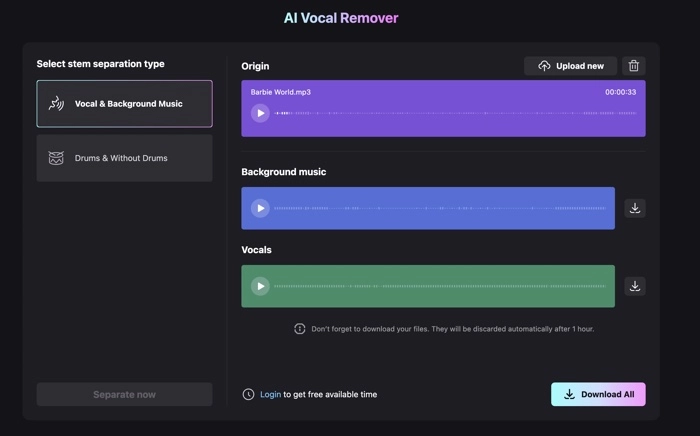
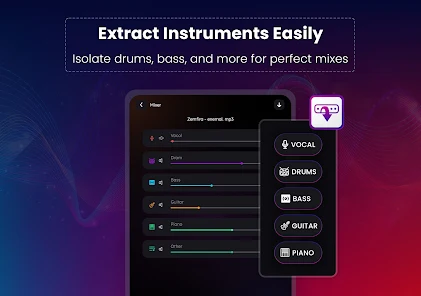
An AI Vocal Remover is a software tool that uses artificial intelligence (AI) and machine learning algorithms to separate vocals from instrumental tracks in audio files.
It is commonly used in music production, karaoke creation, remixing, and audio editing. The tool “isolates” or “removes” the vocal component from a mixed audio file (like MP3, WAV, etc.), leaving behind the instrumental version (or vice versa).
How Does It Work?
Traditional audio separation is complex because audio tracks are mixed down into two channels (stereo). Human ears can distinguish between instruments and voices due to brain processing, but for computers, this requires signal processing and AI.
Steps Involved in AI Vocal Removal:
Audio Input:
A stereo or mono audio file is uploaded.
Source Separation:
AI models like Spleeter (by Deezer), Demucs, or custom deep learning models analyze the sound wave.
These models are trained on thousands of songs where they learned patterns to differentiate between vocals, drums, bass, and other instruments.
Spectrogram Analysis:
The tool converts the audio into a spectrogram (visual representation of frequencies over time).
AI identifies and separates frequency patterns typical of vocals vs. instruments.
Isolation or Removal:
The vocal track is extracted or suppressed based on user intent.
Two output files are created:
Isolated vocals (acapella)
Instrumental (karaoke)
Ai vocal Remover
Diagram: AI Vocal Remover Workflow
The diagram shows how an audio input is processed into two separate outputs: vocals and instrumentals using AI algorithms.
Popular AI Vocal Remover Tools
Tool Name
Platform
Features
Free Version
Moises.ai
Web, Android, iOS
Split into 2/4/5 stems, pitch changer
Yes
Vocal Remover
Web
Real-time vocal/instrumental split
Yes
Spleeter by Deezer
Open-source
Multi-stem separation, customizable
Yes
LALAL.AI
Web
High-quality stem splitting
Limited free
Demucs
GitHub
PyTorch-based audio source separator
Yes
Use Cases of AI Vocal Remover
1. Karaoke Creation
Remove vocals to generate a karaoke version for singing practice or performance.
2. Remixing and Sampling
Extract acapella for mashups, remixes, or DJ mixes.
3. Music Education
Isolate instruments (e.g., bass, drums) to study individual components.
4. Podcast or Interview Editing
Remove background music to focus on dialogue.
5. Noise Reduction
In some cases, used to separate noise from speech for cleaner audio.
Benefits of Using AI Vocal Removers
Benefit
Description
Fast & Accurate
Processes in seconds with high accuracy.
No Need for Studio Files
Works even if you don’t have access to original stems.
Flexible
You can choose to remove vocals or isolate them.
Cloud-Based Options
No need for high-performance computers.
Limitations and Challenges
Limitation
Explanation
Artifacts or Distortion
Some tools may leave behind “ghost” vocals or muffled sounds.
Performance Depends on Quality
Works best on high-quality stereo tracks.
Not Perfect for All Genres
Complex genres like heavy metal or jazz may not isolate perfectly.
Processing Time
Large files may take more time and resources to process.
Chart: Vocal Removal Accuracy by Too
Tool
Accuracy (out of 10)
Speed
Output Quality
Moises.ai
9.5
Fast
Excellent
LALAL.AI
9.0
Medium
Very Good
Spleeter
8.5
Fast
Good
Demucs
9.0
Slow
Very Good
VocalRemover
8.0
Fast
Moderate
Future of AI Vocal Removers
With ongoing improvements in AI, especially in the area of deep learning and audio modeling, we can expect:
Real-time vocal separation during live performance.
Integration with music production software like FL Studio, Ableton Live.
Conclusion
AI vocal removers are transforming how people interact with music. Whether you’re a professional producer, a karaoke lover, or a student of music, these tools offer a practical and powerful way to manipulate audio.
As AI continues to evolve, the precision and real-time capabilities of vocal removal will improve, making music editing more accessible than ever.
AI image enhancers utilize advanced algorithms to upscale, denoise, and restore images, significantly improving clarity and detail. Below are examples demonstrating the enhancements.
An AI image enhancer is a tool or application that uses artificial intelligence to automatically improve the quality, resolution, or visual appeal of an image. These tools are widely used for:
Upscaling ( converting low-resolution images to HD or 4K)
Sharpening and denoising (reducing grain or blur)
Color correction and restoration
Removing compression artifacts
Fixing old/damaged photos
Improving lighting or exposure
How AI IE Work
AI models, particularly convolutional neural networks (CNNs) or generative adversarial networks (GANs), are trained on millions of image pairs (low-quality vs. high-quality). These models learn how to fill in missing details, sharpen edges, and recreate textures intelligently.
Before and After Image enhancer
Popular AI IE Tools
Here are some of the best tools you can try:
Tool
Features
Platform
Remini
HD facial enhancement, video upscaling
Mobile (iOS/Android)
Let’s Enhance
Batch upscaling, color & tone fix
Web
Topaz Gigapixel AI
Professional-level photo upscaling
Windows/Mac
VanceAI
One-click enhancement, noise reduction
Web/Desktop
Adobe Photoshop (Neural Filters)
AI-based skin smoothing, restoration
Windows/Mac
Upscale.media
Free AI image upscaler
Web
HitPaw Photo Enhancer
Auto enhancement, face detail recovery
Desktop
Use Cases
Improving product photos for e-commerce
Enhancing old family photos
Restoring blurred screenshots
Making social media content stand out
Creating print-quality images from small originals
Image enhancer
📊 AI Image Enhancer Comparison Chart
Here’s a comparative chart of leading AI image enhancers, highlighting key features and capabilities:
Objective: Deliver and operate 10 scientific and technological payloads to advance lunar exploration
Blue Ghost Picture
Scientific Payloads and Objectives
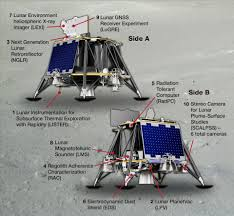
The mission’s 10 payloads, totaling approximately 94 kg, aimed to study various aspects of the lunar environment
Regolith Adherence Characterization (RAC): Assessed how lunar soil sticks to different materials, aiding in the design of future lunar equipment.
Next Generation Lunar Retroreflector (NGLR): Served as a target for Earth-based lasers to measure the Earth-Moon distance precisely.
Lunar Environment Heliospheric X-ray Imager (LEXI): Captured X-ray images to study interactions between the solar wind and Earth’s magnetic field.
Reconfigurable, Radiation Tolerant Computer System (RadPC): Tested computing systems resistant to lunar radiation.
Lunar Magnetotelluric Sounder (LMS): Investigated the Moon’s mantle structure by analyzing electric and magnetic fields.
Lunar Instrumentation for Subsurface Thermal Exploration with Rapidity (LISTER): Measured heat flow from the Moon’s interior by drilling into the regolith.
Lunar PlanetVac (LPV): Collected lunar soil samples for analysis and potential return to Earth.
Stereo Cameras for Lunar Plume Surface Studies (SCALPSS 1.1): Recorded the effects of the lander’s engine plume on the lunar surface during landing.
Electrodynamic Dust Shield (EDS): Tested technology to repel lunar dust from surfaces using electric fields.
Lunar GNSS Receiver Experiment (LuGRE): Demonstrated the use of GPS signals for navigation on the Moon.
Mission Imagery
To enhance your blog, here are four images capturing key aspects of the mission:
Blue Ghost Lander on the Lunar Surface
The Blue Ghost lander after a successful touchdown on Mare Crisium.
LEXI Instrument in Operation
The LEXI payload capturing X-ray images to study solar wind interactions.
Lunar Sunset Captured by Blue Ghost
High-definition image of a lunar sunset, showcasing the Moon’s horizon glow.
SCALPSS 1.1 Camera View
Stereo camera capturing the effects of the lander’s engine plume on the lunar surface.
Blue Rose Shadow
Mission Achievements
First Fully Successful Commercial Moon Landing: Firefly Aerospace became the first private company to achieve a fully successful soft landing on the Moon.
Extended Surface Operations: The lander operated for over 14 Earth days, completing all mission objectives before lunar nightfall.
Scientific Contributions: Data collected will inform future missions, including human exploration efforts under NASA’s Artemis program.