Category: Technology

  • Grok vs Qwen: The AI Showdown Between X and Alibaba

     Grok or Qwen

    Choosing between Grok and Qwen depends on what you’re looking for:


    If you’re a casual user or content creator on X (Twitter):

    • Grok is better.
    • It gives real-time, witty, and sometimes edgy responses.
    • It’s great for conversational use, entertainment, and current events.

    💡 Think of Grok as a chatbot with personality, attitude, and Elon Musk-style flavor.


    If you’re a developer, business owner, or need multilingual/enterprise AI:

    • Qwen wins.
    • Open-source, customizable, and more neutral.
    • Strong performance in coding, document summarization, and even image-related tasks (via Qwen-VL).

    💡 Qwen is like the calm, powerful engine behind serious work – especially if you need Chinese-English language support or want to build your own AI products.


    ⚖️ Bottom Line:

    Use CaseWinner
    Fun, edgy conversationsGrok
    Real-time trending dataGrok
    Enterprise or professional appsQwen
    Multilingual capabilityQwen
    Open-source and developer controlQwen
    Twitter/X integrationGrok

    Artificial Intelligence (AI) is evolving rapidly, and two notable names shaking things up in the AI landscape are Grok by xAI (Elon Musk’s AI company) and Qwen by Alibaba Cloud. These two powerful AI models are vying for dominance in the world of language models and chatbot technology. But how do they differ? Which one is better for certain use cases? Let’s dive into a detailed comparison of Grok and Qwen.

    1. The Companies Behind the Models

    Grok is developed by xAI, an AI company founded by Elon Musk in 2023. Grok is tightly integrated with X (formerly Twitter) and is designed with a rebellious, witty personality that aims to give users a more raw, unfiltered chatbot experience. Grok is available as part of the X Premium+ subscription, targeting users already active on the X platform.

    On the other hand, Qwen is developed by Alibaba Cloud, the cloud computing arm of Chinese tech giant Alibaba. Qwen is short for “Tongyi Qianwen” (通义千问), which roughly translates to “a thousand questions with coherent answers.” It’s aimed at enterprise use cases and productivity tools, and has been made available in open-source formats for developers and businesses to build upon.

    grok vs qwen
    Grok

    2. Model Architecture and Capabilities

    Grok is based on a proprietary model called Grok-1, which reportedly has around 314 billion parameters. This makes it quite large and powerful, capable of tasks such as code generation, math problem solving, reasoning, and natural conversation. Grok is designed with an emphasis on real-time awareness, thanks to its integration with X (Twitter), allowing it to pull in current events and trending data.

    Qwen, specifically Qwen-72B and Qwen-VL (vision-language), is also a large language model, built using transformer-based architecture similar to GPT. Qwen models are open-source, and Alibaba released both base and fine-tuned versions, giving researchers and businesses flexibility to adapt the models for specific needs.

    Where Grok emphasizes personality and live data, Qwen focuses on multilingual support (especially Mandarin and English) and versatility across tasks like text generation, summarization, image captioning (via Qwen-VL), and code interpretation.

    3. Personality vs. Professionalism

    One of Grok’s standout features is its personality. Musk himself stated that Grok is designed to have a “bit of wit and a rebellious streak.” It often replies in a cheeky or sarcastic tone, aiming to feel less robotic and more conversational. This makes Grok entertaining but may not always be appropriate in professional settings.

    Qwen, in contrast, is built to be more neutral, professional, and adaptive. Its tone is calm and business-friendly, making it suitable for enterprise applications, document processing, and customer service automation. It doesn’t aim to be entertaining but excels in utility and multilingual capabilities.

    4. Accessibility and Ecosystem

    Grok is currently available only via X Premium+, limiting access to users who are part of that platform. It’s tightly integrated with X, which is both a strength and a limitation—it’s powerful for users of the ecosystem but not as widely deployable outside of it.

    Qwen’s biggest strength is its open-source availability. Developers can fine-tune and self-host the model, integrate it into websites, apps, or customer platforms without being locked into a subscription. It’s particularly strong in China and among companies that need custom AI tools.

    grok
    Grok

    5. Performance and Benchmarks

    While Grok’s exact benchmark scores haven’t been fully disclosed publicly, Musk claims that Grok-1 performs competitively with GPT-3.5 and approaches GPT-4 in some tasks.

    Qwen-72B, on the other hand, has shown strong performance in open benchmarks like MMLU and HumanEval, placing it among the top open-source LLMs. In coding tasks and reasoning, Qwen-72B is often compared favorably to Meta’s LLaMA 2 or Mistral models.


    Final Thoughts: Which One is Better?

    • Choose Grok if you want a lively AI with up-to-the-minute data and enjoy interacting on X. It’s great for conversational use and entertainment.
    • Go with Qwen if you need a customizable, multilingual, open-source AI for business, development, or research. It’s more flexible and enterprise-ready.
    AI
    AI
  • AI Code Assistant

    image image
    AI coding

    What is an AI Code Assistant?

    An AI Code Assistant is a smart software tool that helps developers write, understand, and improve code more efficiently. Powered by artificial intelligence and machine learning, these tools can analyze code in real-time and offer suggestions, write snippets, fix bugs, and even explain code to make programming easier and faster.

    How AI Code Assistants Work?

    AI code assistants are trained on huge datasets of programming languages like Python, JavaScript, HTML, CSS, and more. Using natural language processing (NLP), these tools can understand what you’re trying to code, and then provide useful suggestions — just like a helpful coding partner.

    Popular AI assistants like GitHub Copilot, CodeWhisperer, and Tabnine are examples of tools already used by millions of developers globally.

    ai
    AI

    Benefits of Using an AI Code Assistant:

    ✅ সুবিধা🔍 বিস্তারিত
    💨 Faster CodingAI predicts your next line and autocompletes code
    🐛 Bug FixingDetects errors early and suggests fixes
    📚 Learning ToolGreat for beginners – explains what the code does
    📄 Documentation HelpAutomatically generates docstrings or comments
    🔁 Code RefactoringSuggests more efficient versions of your code
    🌐 Multi-language SupportWorks with many programming languages

    Who Should Use It?

    Whether you’re a beginner learning to code, a freelancer, or a professional developer, AI code assistants can be a great tool in your workflow. It saves time, boosts productivity, and even helps you learn new coding styles and best practices.

    ai
    AI coding

    Things to Keep in Mind

    While AI code assistants are powerful, they aren’t perfect. They can sometimes suggest incorrect or unsafe code. So it’s always a good idea to review the suggestions carefully before using them.

    The Future of Coding:

    AI code assistants are changing the way we write code. In the near future, developers might spend less time writing code and more time focusing on ideas and architecture — thanks to smart AI help.

  • Alibaba’s Qwen AI

    image 69 image 69

    Qwen AI, developed by Alibaba Cloud, represents a significant advancement in the field of artificial intelligence, particularly in natural language processing (NLP). Introduced in April 2023 under the name Tongyi Qianwen, Qwen has rapidly evolved to become a leading large language model (LLM), showcasing Alibaba’s commitment to AI innovation.​

    Alibaba said its new model is accessible via its chatbot service, Qwen Chat, for which users can choose various Qwen models including Qwen2.5-Max, the most powerful language model in the Qwen series.

    The QwQ-32B demonstrated capabilities in mathematical reasoning, coding and general problem-solving in benchmark tests, performing close to top models such as OpenAI’s o1 mini and DeepSeek’s R1, Alibaba said further.

    DeepSeek has emerged as the poster child of China’s AI prowess, rivaling top models from OpenAI for a small fraction of their cost with less powerful computing.

    Evolution and Development

    Initially, Qwen’s architecture was based on Meta AI’s Llama model. Over time, Alibaba expanded and refined Qwen, leading to the release of multiple versions with varying capabilities. By July 2024, Qwen was recognized as the top Chinese language model in certain benchmarks and ranked third globally, following models from Anthropic and OpenAI.

    qwen ai
    Qwen AI

    Key Features and Capabilities

    Qwen AI offers a range of models tailored to diverse applications:​

    • Qwen 2.5-Max: Designed for maximum performance across various tasks, this model features an extended 128K token context window, enabling the analysis of extensive documents without losing critical details. This makes it ideal for applications such as contract analysis, research synthesis, and document summarization. ​
    • Qwen2.5-Coder: Trained on 5.5 trillion tokens of code-related data, this model supports 92 programming languages. It excels in code generation, multi-language support, contextual understanding, and auto-debugging, achieving state-of-the-art results in coding tasks. ​
    • Qwen2.5-Math: Incorporating advanced reasoning techniques such as Chain-of-Thought (CoT) and Program-of-Thought (PoT), this model effectively solves complex mathematical problems, outperforming many larger models in mathematical reasoning tasks. ​
    • Qwen2.5-VL: This variant specializes in visual analysis, capable of interpreting images at any resolution without segmentation. It excels in text recognition across multiple languages, object detection, and scene understanding, making it valuable for applications requiring cross-modal comprehension.

    alibaba
    Qwen AI

    Recent Developments

    In March 2025, Alibaba introduced the QwQ-32B reasoning model, boasting 32 billion parameters. Despite its relatively smaller size, QwQ-32B delivers performance comparable to larger models like DeepSeek’s R1, which has 671 billion parameters. This model demonstrates strong capabilities in mathematical reasoning, coding, and problem-solving, positioning it as a formidable competitor in the AI landscape.

    Industry Applications

    Qwen AI’s versatility has led to its adoption across various industries:​

    • Healthcare: Companies like AstraZeneca have leveraged Qwen to analyze medical literature and generate adverse event reports, resulting in a 300% increase in efficiency and improved accuracy. ​
    • E-commerce: Qwen assists in creating SEO-friendly product descriptions in multiple languages, enhancing online retail experiences. ​
    • Education: The model provides tutorials in subjects like mathematics and coding, supporting educational initiatives and personalized learning experiences.
    qwen
    Qwen AI 1.5

    Strategic Impact on Alibaba

    The development of Qwen AI has been pivotal in Alibaba’s strategic pivot towards artificial intelligence. Facing challenges in late 2022, including regulatory scrutiny and declining market shares, Alibaba, under Jack Ma’s leadership, intensified its focus on AI. This shift involved increased investments, support for AI startups, and the development of advanced models like Qwen, which have revitalized the company’s market position and investor confidence. ​

    Conclusion

    Qwen AI exemplifies Alibaba’s dedication to advancing artificial intelligence and natural language processing. With its diverse models and applications, Qwen is poised to make significant contributions across various sectors, driving innovation and efficiency. As AI continues to evolve, Qwen’s ongoing development will likely play a crucial role in shaping the future of intelligent systems.

    image 73 image 73
  • Exploring Meta.com: A Deep Dive into AI, VR, and the Future of Digital Interaction

    Introduction to Meta

    Meta, formerly known as Facebook, is a multinational technology company that focuses on social networking, artificial intelligence, virtual reality (VR), and the metaverse. The company was rebranded as “Meta” in 2021 to reflect its shift toward developing immersive digital experiences and expanding beyond traditional social media.

    Meta.com serves as the primary online hub for Meta’s projects, services, and developer tools. It provides insights into Meta’s cutting-edge AI research, virtual and augmented reality initiatives, and resources for developers who build on Meta’s platforms.

    Meta Title:
    “Effective Marketing Strategies | Boost Your Business with Smart Tactics”

    Meta Description:
    “Discover powerful marketing strategies to grow your business. Learn about digital marketing, SEO, social media, and content marketing to drive engagement and sales.”

    Additional Meta Keywords:
    Marketing, Digital Marketing, SEO, Social Media Marketing, Content Marketing, Business Growth, Online Advertising, Lead Generation

    meta

    Key Areas of Focus on Meta.com

    1. Artificial Intelligence (AI)

    AI is one of the core areas that Meta invests in heavily. The company develops advanced AI models to enhance user experiences across its platforms, including Facebook, Instagram, WhatsApp, and Messenger.

    • Llama AI Models: Meta’s Llama (Large Language Model Meta AI) is a powerful AI model that enables natural language processing tasks. Recently, Meta has introduced quantized versions of its Llama 3.2 models, optimized for smartphones and edge devices.
    • Computer Vision & Speech Recognition: Meta’s AI research team is working on improving image recognition, voice synthesis, and real-time language translation to enhance accessibility and user interaction.

    Meta.com provides access to AI research papers, blog posts, and developer resources for those interested in the latest advancements.

    fb

    2. Metaverse and Virtual Reality (VR)

    Meta envisions the metaverse as the next evolution of the internet—an interconnected virtual space where users can interact, work, and socialize.

    • Meta Horizon Worlds: A social VR platform where users can create, explore, and connect in shared virtual spaces.
    • Meta Quest VR Headsets: Meta’s VR devices, such as the Meta Quest 3, provide immersive gaming and interactive experiences.
    • Augmented Reality (AR): Through platforms like Spark AR, developers can create AR effects for social media apps like Instagram and Facebook.

    Meta.com offers resources for developers interested in creating VR and AR applications, along with updates on metaverse-related projects.


    3. Developer Tools and APIs

    Meta provides a wide range of tools for developers to build applications, integrate with its platforms, and leverage AI models.

    • Graph API & Marketing API: These tools allow developers to access data from Facebook and Instagram, enabling businesses to optimize their marketing strategies.
    • Meta Business Tools: Includes advertising solutions, analytics, and automation tools for businesses to engage with their audience effectively.
    • Spark AR Studio: A tool that allows developers to create augmented reality experiences for Meta’s platforms.

    Meta.com provides documentation, SDKs, and tutorials to support developers in using these tools.


    4. Privacy, Security, and Responsible AI

    As part of its commitment to ethical technology development, Meta focuses on privacy, security, and responsible AI practices.

    • End-to-End Encryption: Meta has implemented encryption in messaging services like WhatsApp and Messenger to enhance user security.
    • AI Transparency & Fairness: The company publishes reports on how it builds and trains AI systems to ensure fairness and prevent biases.
    • Content Moderation & Misinformation Prevention: Meta’s AI and human moderation teams work to reduce the spread of harmful content on its platforms.

    Meta.com regularly publishes updates on privacy policies and security initiatives to keep users informed.


    Conclusion

    Meta.com serves as the gateway to Meta’s innovations in AI, VR, AR, and social networking. It provides valuable resources for developers, businesses, and users interested in the future of digital interactions. Whether it’s AI-powered chatbots, virtual reality experiences, or privacy-enhancing technologies, Meta continues to shape the future of online communication and connectivity.

  • Some Claude AI : The Future of Safe and Ethical AI Technology

    claude ai

    Claude AI, developed by Anthropic, is an advanced artificial intelligence language model designed to understand and generate human-like text. It belongs to the same family of large language models as OpenAI’s GPT models, and it aims to offer a conversational AI experience that is safe, ethical, and interpretable.

    The Claude AI family is named after Claude Shannon, a foundational figure in the field of information theory, reflecting the model’s focus on efficient, interpretable, and meaningful communication.

    Claude AI Evolution

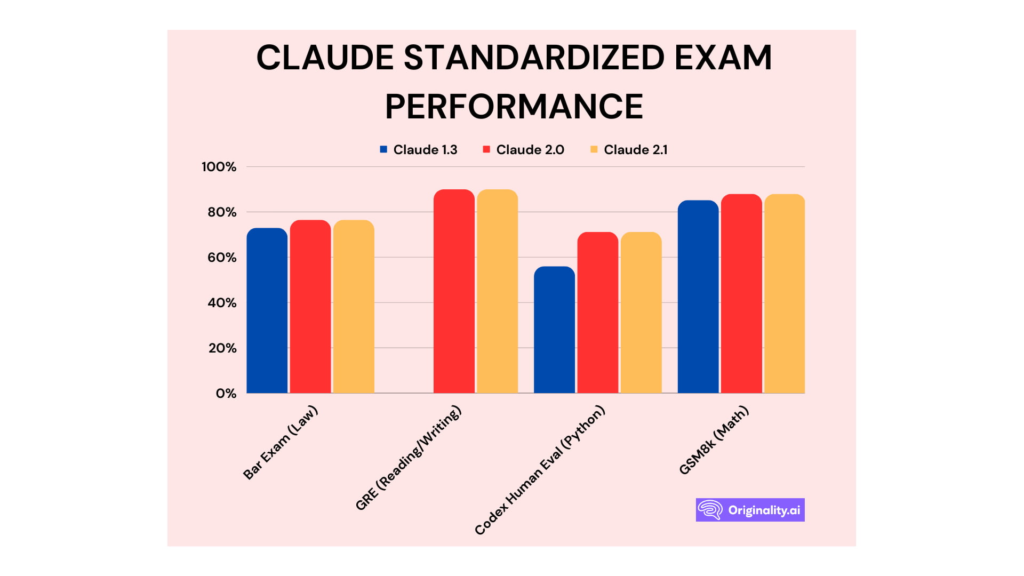
    1. Claude 1.3: This initial version demonstrated strong foundational abilities, achieving:
      • Bar Exam (MBE): 73%
      • HumanEval (Python coding): 56%
      • GSM8K (Grade School Math): 85.2%
    2. Claude 2: Building upon its predecessor, Claude 2 showcased significant improvements:
      • Bar Exam (MBE): 76.5%
      • GRE Writing: 5.0 (out of 6)
      • HumanEval (Python coding): 71.2%
      • GSM8K (Math): 88%
    3. Claude 3 Series: Anthropic introduced three models—Opus, Sonnet, and Haiku—each tailored for specific applications:
      • Claude 3 Opus: The most advanced model, excelling in complex tasks.
      • Claude 3 Sonnet: Balances intelligence and speed, ideal for enterprise workloads.
      • Claude 3 Haiku: Designed for rapid responses, offering cost-effective solutions.
    image 17 image 17

    Performance Benchmarks

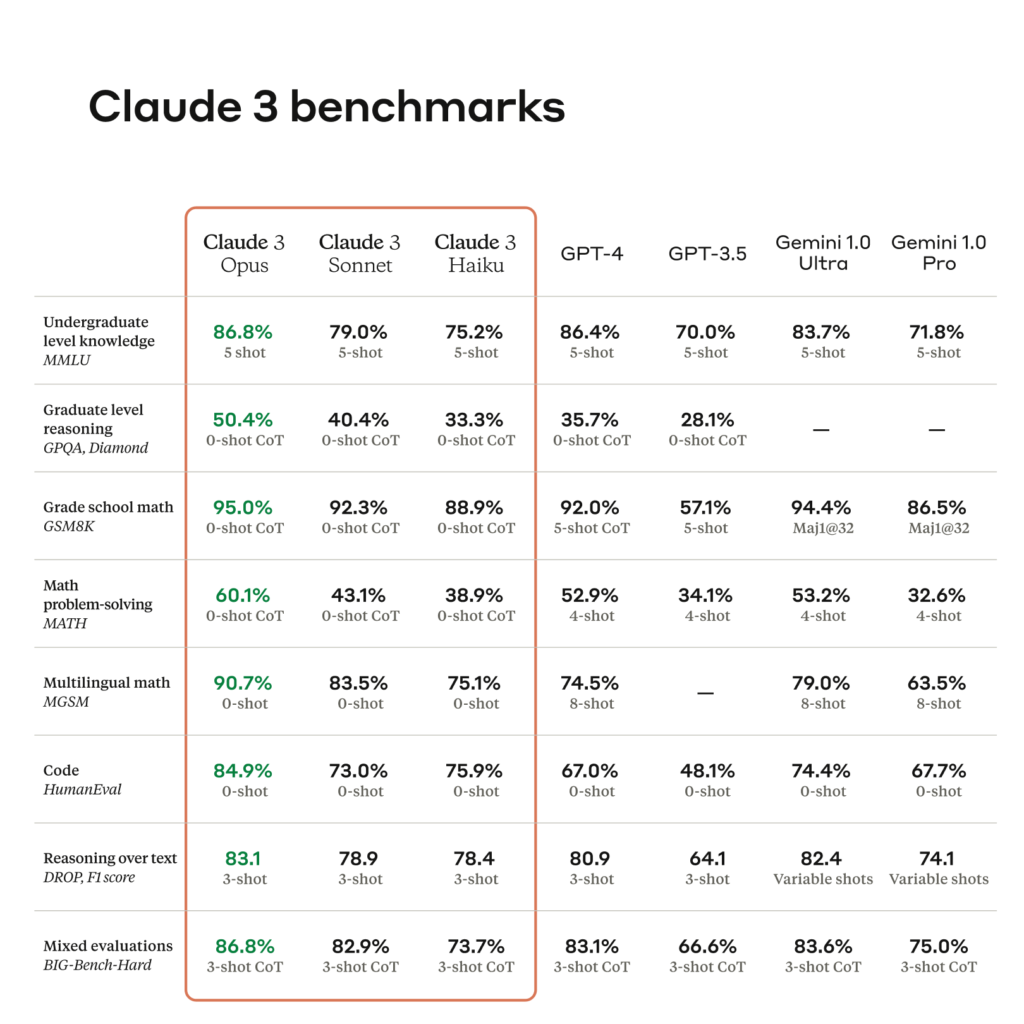
    Claude 3 Opus has achieved notable scores across various standardized tests:

    TestClaude 3 OpusGPT-4
    Bar Exam (MBE)85%75.7%
    GRE Quantitative159N/A
    GRE Verbal166N/A
    GRE Writing5.0N/A
    HumanEval (Python coding)84.9%N/A
    GSM8K (Math)95%92%

    Note: GRE scores are out of 170 for Quantitative and Verbal sections, and out of 6 for Writing.

    Multimodal Capabilities

    All Claude 3 models are vision-language models (VLMs), enabling them to process both text and images. This multimodal capability allows for reasoning over diverse data types, including charts, presentations, PDFs, and images.

    Speed and Cost Efficiency

    Anthropic has optimized the Claude 3 models for both performance and cost:

    • Claude 3 Sonnet: Twice as fast as Claude II, suitable for large-scale deployments.
    • Claude 3 Haiku: The fastest and most cost-effective model, with a 200k context window and lower token pricing than GPT-3.5.
    claude

    Availability

    Claude 3 Opus and Sonnet are accessible via Anthropic’s API. Sonnet is also available on Amazon Bedrock and in private preview on Google Cloud’s Vertex AI Model Garden, with plans to include Opus and Haiku soon.

    Recent Developments

    Anthropic’s latest release, Claude 3.7 Sonnet, introduces “hybrid reasoning” capabilities, enhancing problem-solving, mathematical reasoning, and coding proficiency. This model is available through the Claude app, Anthropic’s API, Amazon Bedrock, and Google’s Vertex AI.

    benchmarks

    Company Valuation and Vision

    Anthropic’s valuation has surged to $61.5 billion, following a $3.5 billion funding round. The company aims to develop AI models that can transform society by automating complex tasks, akin to the impact of the industrial revolution.

    Co-founder and CEO Dario Amodei predicts that superintelligent AI, surpassing human intelligence in most fields, could emerge as early as next year.

    model

    Comparative Analysis

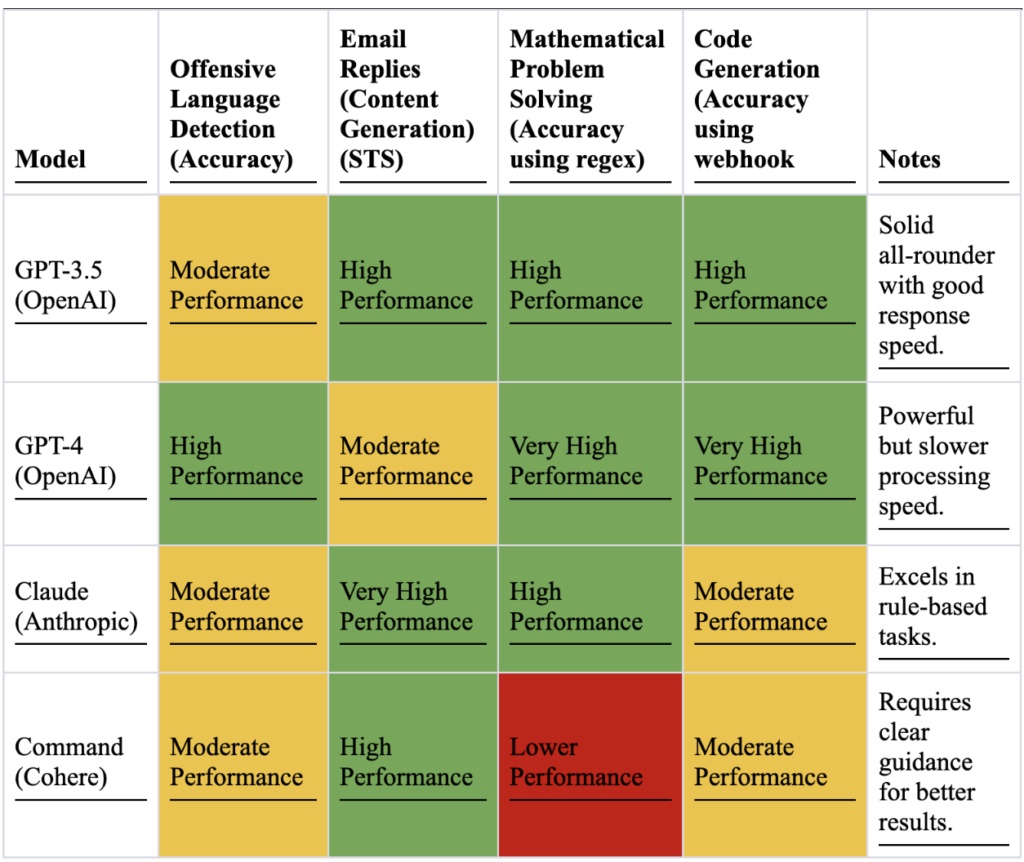
    In evaluations comparing AI assistants, Claude stands out for its ability to organize tasks and suggest actionable steps with a personable touch. However, it currently lacks real-time web access, a feature present in some competitors

    Claude AI’s advancements highlight Anthropic’s dedication to responsible AI development. With the Claude 3 series, especially Opus, the model has achieved state-of-the-art performance in reasoning, coding, and problem-solving. Its multimodal capabilities allow it to process text and images effectively.

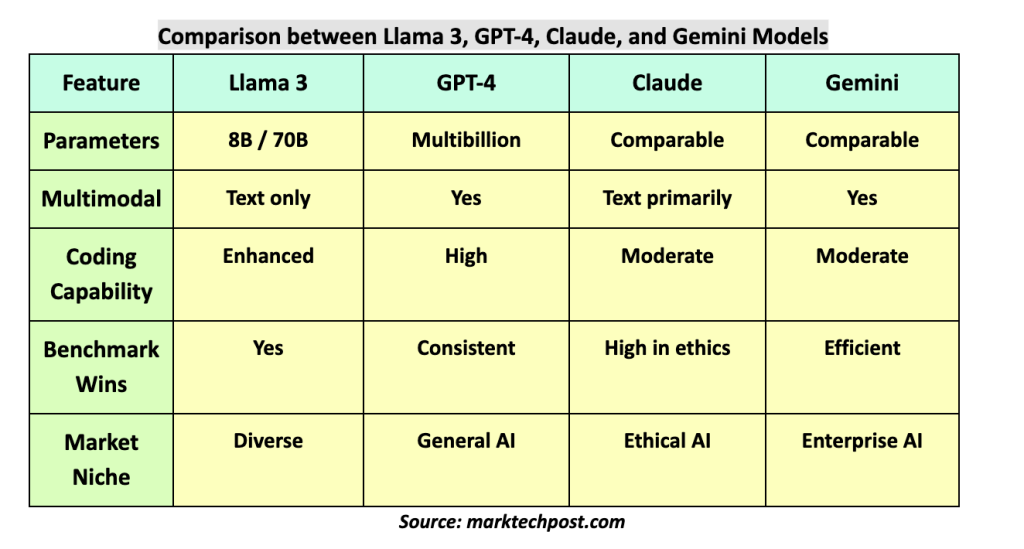
    Compared to GPT-4, Claude 3 excels in some areas like the bar exam and Python coding. However, it still lacks real-time internet access, limiting its ability to fetch the latest information. As AI continues to evolve, Claude AI remains a strong contender in the race for general intelligence, pushing the boundaries of AI-powered automation and innovation.

    comparison

    Conclusion

    Claude AI’s evolution reflects Anthropic’s commitment to advancing AI capabilities while emphasizing safety and reliability. With each iteration, Claude has demonstrated significant improvements, positioning itself as a formidable competitor in the AI landscape.

  • Difference Between 2 AI ChatGPT & DeepSeek

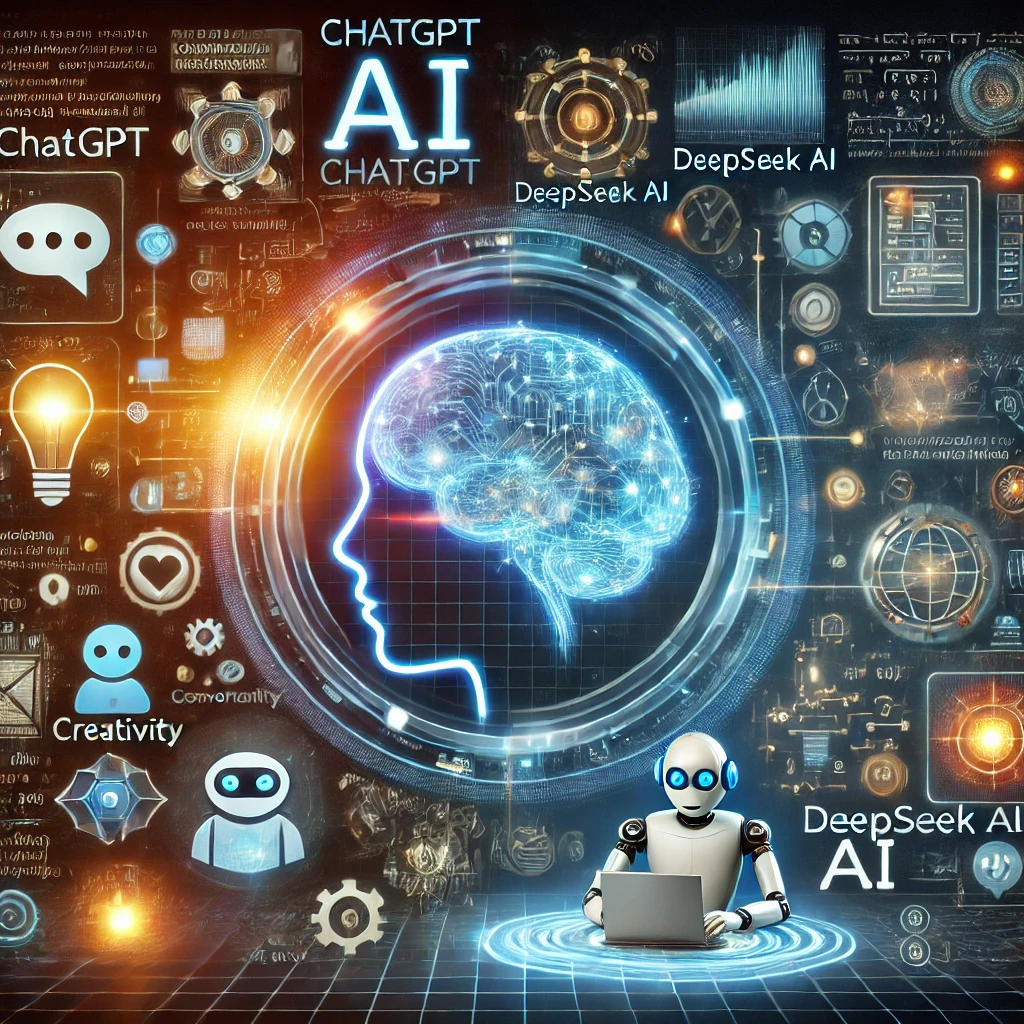
    DALL·E 2025 03 04 14.47.58 A futuristic digital concept image comparing ChatGPT and DeepSeek AI. On the left side ChatGPT is represented with a glowing AI brain surrounded by DALL·E 2025 03 04 14.47.58 A futuristic digital concept image comparing ChatGPT and DeepSeek AI. On the left side ChatGPT is represented with a glowing AI brain surrounded by

    Difference Between ChatGPT & DeepSeek :

    FeatureChatGPT (OpenAI)DeepSeek (DeepSeek AI)
    DeveloperOpenAIDeepSeek AI
    Model TypeLarge Language Model (LLM)Large Language Model (LLM)
    Training DataTrained on diverse internet data, books, research papers (up to knowledge cutoff)Trained on large-scale datasets, optimized for reasoning and math
    Use CaseGeneral AI chatbot for conversation, coding, creative writing, and assistanceStrong focus on problem-solving, logic, and math reasoning
    Coding AbilityStrong coding support (Python, Java, C++, etc.), debugging, and explanationsGood coding support, optimized for complex programming logic
    Math & LogicGood at basic to advanced math but may struggle with deep mathematical proofsSuperior reasoning and math-solving abilities
    CreativityExcels in creative writing, storytelling, and brainstormingLess focused on creativity, more on structured responses
    AvailabilityAvailable via OpenAI (free & pro versions)Available via DeepSeek AI (limited access)
    MultimodalSupports text and image generation (GPT-4 with vision)Primarily text-based, no multimodal capabilities
    chatgpt

    Which One to Choose?

    • Use ChatGPT if you need creative writing, general assistance, coding help, or interactive conversation.
    • Use DeepSeek if you need strong problem-solving, mathematical reasoning, or deep analytical responses.
    deepseek

    1. Overview

    • ChatGPT (OpenAI): A versatile AI designed for conversation, creativity, coding, and general knowledge tasks.
    • DeepSeek (DeepSeek AI): A specialized AI optimized for logical reasoning, math, and problem-solving.

    2. Key Differences

    FeatureChatGPT 🧠💬DeepSeek AI 🤖📊
    StrengthsCreative writing, conversations, coding, storytellingAdvanced math, logic, problem-solving, programming
    Training FocusGeneral knowledge, diverse datasetsAnalytical reasoning, deep logical computations
    Coding SkillsGood at explaining and writing codeMore structured and logic-driven coding
    Math AbilitiesCan solve many math problems but struggles with proofsExcels in math-heavy tasks, structured calculations
    CreativityStrong in creative tasks like poetry, fiction, and design ideasLimited creativity, more structured responses
    Use CasesChatbots, content creation, learning aid, general assistanceMath solving, algorithmic problem-solving, structured logic tasks
    Multimodal (Text + Image)GPT-4 can process text and imagesPrimarily text-based, no vision model
    Best for…Writers, programmers, students, business usersResearchers, mathematicians, programmers, engineers

    3. When to Use Each AI?

    Use ChatGPT if you need:

    • Engaging conversation
    • Creative writing (stories, scripts, poems)
    • Code explanations and debugging
    • Business and marketing content
    • General knowledge and brainstorming

    Use DeepSeek AI if you need:

    • Complex math problem-solving
    • Logical reasoning and structured problem-solving
    • Algorithm development
    • Technical coding and mathematical proofs

    4. Which is Better?

    It depends on your needs!

    • If you need creativity, conversation, and versatility, go with ChatGPT.
    • If you need deep logic, math, and structured problem-solving, DeepSeek AI is a better choice.

    ChatGPT vs. DeepSeek AI: A Deep Comparison

    1. Purpose & Design

    ChatGPT, developed by OpenAI, is a general-purpose AI chatbot designed to assist users with various tasks, including conversations, creative writing, coding, learning, and business applications. It excels in generating human-like text, making it useful for writers, students, and professionals.

    On the other hand, DeepSeek AI is engineered for advanced logical reasoning, mathematics, and problem-solving. It specializes in structured thinking, making it a powerful tool for engineers, researchers, and programmers who need precise calculations and logical answers.

    2. Strengths & Weaknesses

    ChatGPT is highly creative and can generate stories, poetry, business plans, and even debug code. However, it sometimes struggles with deep mathematical proofs and strict logical consistency.

    DeepSeek AI, in contrast, is built for rigorous reasoning and excels at solving complex mathematical equations and algorithmic problems. While it is excellent at precision-based tasks, it lacks the same level of creativity and natural conversation ability as ChatGPT.

    3. Best Use Cases

    • ChatGPT: Ideal for casual conversations, content creation, idea brainstorming, and general problem-solving.
    • DeepSeek AI: Best for mathematics, structured programming logic, and research-based queries requiring exact answers.

    In short, ChatGPT is more versatile, while DeepSeek AI is more specialized for logical and mathematical tasks. Choosing the right AI depends on your specific needs!